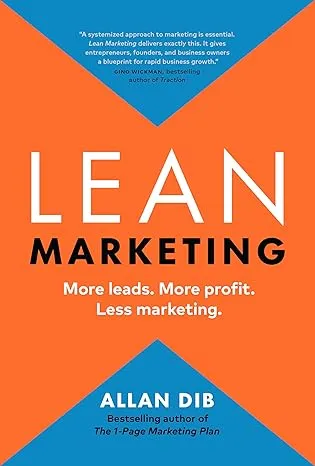
Lean Marketing
Alan Dibb
Lean Marketing is a concise, actionable, and no-nonsense guide for entrepreneurs, marketers, and business leaders who want real marketing that moves the needle—fast. Allan Dib’s writing style is direct, engaging, and full of practical examples. The book avoids fluff and academic theory in favor of tools, checklists, and repeatable systems.
Review
Content
Video
Review
“Book Review: Lean Marketing: More Leads, More Profit, Less Marketing by Allan Dib
Allan Dib’s Lean Marketing: More Leads, More Profit, Less Marketing is a highly practical and straightforward guide for small businesses, entrepreneurs, and marketers looking to optimize their marketing efforts. Drawing from the principles of lean management, Dib aims to deliver a streamlined approach that minimizes waste, focuses on efficiency, and drives results without overburdening budgets or resources.
Key Themes
Efficiency and Simplicity: The core idea of the book is doing more with less. Dib breaks down marketing strategies into digestible steps that can be easily implemented, without requiring a vast budget or overwhelming marketing efforts. This aligns with the lean philosophy of focusing on what truly adds value, while eliminating non-essential tasks.
The Marketing System: Dib introduces a systematic, step-by-step approach that he calls the “”One-Page Marketing Plan.”” This is one of the highlights of the book, as it provides a concrete framework that helps readers focus on creating effective marketing strategies in a structured way. It’s designed to be simple enough for any business owner to implement, even if they don’t have extensive marketing experience.
Customer-Centric Approach: Dib emphasizes the importance of understanding and targeting the right customers. He advocates for clear segmentation and a deep understanding of customer needs and behaviors, helping businesses reach their ideal clients with the right message. This focus on the customer journey and personalized marketing helps businesses stand out and build loyalty.
Results-Driven: Unlike many marketing books that get caught up in theory, Lean Marketing is grounded in practical application and outcome-based thinking. Dib’s writing consistently reminds readers that marketing is only valuable if it generates leads and profits. He offers real-world examples and actionable advice, making it easy for readers to measure and track success.
Writing Style
Allan Dib’s writing is accessible, direct, and no-nonsense. His tone is conversational, making it easy to digest even more complex marketing concepts. He doesn’t get bogged down in jargon, which is refreshing for readers who might not have a background in marketing. Instead, he prioritizes clarity and practical insights, ensuring that the book is as useful to a marketing novice as it is to someone with more experience.
The structure of the book is also a plus: it’s divided into clear sections, each focusing on a different aspect of building an effective marketing system. The logical flow makes it easy to follow along and refer back to specific sections as needed.
Strengths
Actionable Advice: The biggest strength of Lean Marketing is its hands-on, actionable approach. Dib doesn’t just give theory; he provides steps, templates, and clear instructions on how to execute a marketing strategy.
Time and Cost Efficiency: This book is particularly valuable for small business owners or startups with limited marketing budgets. It’s all about maximizing the return on investment, and Dib’s strategies ensure that no effort is wasted.
Focus on Results: The book is laser-focused on achieving measurable results, whether that be generating leads, increasing profits, or reducing the time spent on marketing. This keeps the reader’s attention squarely on the end goal.
Criticism
While Lean Marketing offers a great deal of actionable advice, some readers might find that its simplicity may not go deep enough for more advanced marketers or larger businesses with more complex needs. The book is heavily geared toward small businesses and solopreneurs, so organizations with more significant resources might feel the strategies are too basic.
Another potential drawback is that the book leans heavily on the assumption that readers already have some sense of their business goals and customer profiles. Readers new to the idea of market segmentation or who lack a well-defined product or service may need more foundational insights before diving into the one-page marketing plan.
Overall Assessment
Allan Dib’s Lean Marketing: More Leads, More Profit, Less Marketing is an excellent resource for small business owners, entrepreneurs, and marketers looking for a no-nonsense, results-driven guide to marketing. Its focus on simplicity, efficiency, and customer-centric strategies makes it a valuable read for anyone seeking to improve their marketing efforts without overextending their resources. While it may not go deep enough for larger organizations or seasoned marketers, it delivers immense value to its target audience by offering practical tools and techniques that can be implemented right away.
For those looking for a fast, effective, and lean approach to marketing, Dib’s book is a solid, hands-on guide that cuts through the clutter and delivers real-world results.
“
Allan Dib’s Lean Marketing: More Leads, More Profit, Less Marketing is a highly practical and straightforward guide for small businesses, entrepreneurs, and marketers looking to optimize their marketing efforts. Drawing from the principles of lean management, Dib aims to deliver a streamlined approach that minimizes waste, focuses on efficiency, and drives results without overburdening budgets or resources.
Key Themes
Efficiency and Simplicity: The core idea of the book is doing more with less. Dib breaks down marketing strategies into digestible steps that can be easily implemented, without requiring a vast budget or overwhelming marketing efforts. This aligns with the lean philosophy of focusing on what truly adds value, while eliminating non-essential tasks.
The Marketing System: Dib introduces a systematic, step-by-step approach that he calls the “”One-Page Marketing Plan.”” This is one of the highlights of the book, as it provides a concrete framework that helps readers focus on creating effective marketing strategies in a structured way. It’s designed to be simple enough for any business owner to implement, even if they don’t have extensive marketing experience.
Customer-Centric Approach: Dib emphasizes the importance of understanding and targeting the right customers. He advocates for clear segmentation and a deep understanding of customer needs and behaviors, helping businesses reach their ideal clients with the right message. This focus on the customer journey and personalized marketing helps businesses stand out and build loyalty.
Results-Driven: Unlike many marketing books that get caught up in theory, Lean Marketing is grounded in practical application and outcome-based thinking. Dib’s writing consistently reminds readers that marketing is only valuable if it generates leads and profits. He offers real-world examples and actionable advice, making it easy for readers to measure and track success.
Writing Style
Allan Dib’s writing is accessible, direct, and no-nonsense. His tone is conversational, making it easy to digest even more complex marketing concepts. He doesn’t get bogged down in jargon, which is refreshing for readers who might not have a background in marketing. Instead, he prioritizes clarity and practical insights, ensuring that the book is as useful to a marketing novice as it is to someone with more experience.
The structure of the book is also a plus: it’s divided into clear sections, each focusing on a different aspect of building an effective marketing system. The logical flow makes it easy to follow along and refer back to specific sections as needed.
Strengths
Actionable Advice: The biggest strength of Lean Marketing is its hands-on, actionable approach. Dib doesn’t just give theory; he provides steps, templates, and clear instructions on how to execute a marketing strategy.
Time and Cost Efficiency: This book is particularly valuable for small business owners or startups with limited marketing budgets. It’s all about maximizing the return on investment, and Dib’s strategies ensure that no effort is wasted.
Focus on Results: The book is laser-focused on achieving measurable results, whether that be generating leads, increasing profits, or reducing the time spent on marketing. This keeps the reader’s attention squarely on the end goal.
Criticism
While Lean Marketing offers a great deal of actionable advice, some readers might find that its simplicity may not go deep enough for more advanced marketers or larger businesses with more complex needs. The book is heavily geared toward small businesses and solopreneurs, so organizations with more significant resources might feel the strategies are too basic.
Another potential drawback is that the book leans heavily on the assumption that readers already have some sense of their business goals and customer profiles. Readers new to the idea of market segmentation or who lack a well-defined product or service may need more foundational insights before diving into the one-page marketing plan.
Overall Assessment
Allan Dib’s Lean Marketing: More Leads, More Profit, Less Marketing is an excellent resource for small business owners, entrepreneurs, and marketers looking for a no-nonsense, results-driven guide to marketing. Its focus on simplicity, efficiency, and customer-centric strategies makes it a valuable read for anyone seeking to improve their marketing efforts without overextending their resources. While it may not go deep enough for larger organizations or seasoned marketers, it delivers immense value to its target audience by offering practical tools and techniques that can be implemented right away.
For those looking for a fast, effective, and lean approach to marketing, Dib’s book is a solid, hands-on guide that cuts through the clutter and delivers real-world results.
“
Content
Summary of Lean Marketing: More Leads, More Profit, Less Marketing by Allan Dib
In Lean Marketing: More Leads, More Profit, Less Marketing, Allan Dib presents a practical and streamlined approach to marketing, particularly aimed at small businesses, entrepreneurs, and those with limited resources. The book focuses on efficiency, helping businesses generate more leads and increase profits while reducing the time, effort, and money spent on marketing.
Key Concepts:
Lean Marketing Philosophy: Borrowing from lean management principles, Dib advocates for focusing on what truly adds value to the business and eliminating any marketing tasks that don’t directly contribute to generating leads or profits. This efficiency-first mindset forms the backbone of his approach.
The One-Page Marketing Plan: A central feature of the book is Dib’s “One-Page Marketing Plan,” a simple, step-by-step framework that helps businesses map out their entire marketing strategy on a single page. This system covers everything from understanding your target audience to creating and executing marketing campaigns. The plan is designed to be easy to implement for any business, regardless of size or marketing experience.
Customer-Centric Focus: Dib stresses the importance of deeply understanding your ideal customers. He encourages businesses to segment their audience, tailor their messaging, and focus on the customer journey to create personalized marketing that resonates with their target market.
Outcome-Oriented Strategies: The book is highly focused on actionable, results-driven strategies. Dib provides practical steps and examples that show how to generate leads and convert them into paying customers, making the marketing process more measurable and effective.
Minimizing Waste: One of the key ideas of Lean Marketing is reducing the time and money wasted on ineffective marketing strategies. Dib advises readers to focus on high-impact activities that lead to actual business growth and avoid the temptation to spread resources too thin.
Structure and Style:
The book is written in a straightforward, conversational style, making it accessible to readers with varying levels of marketing knowledge. Dib avoids marketing jargon and breaks down complex concepts into easy-to-understand steps. The book is organized into clear sections that cover the essential components of a marketing strategy, making it a practical guide for immediate application.
Who Is It For?
This book is especially helpful for small business owners, solopreneurs, and marketers who want to maximize their results without a large budget or complex systems. The lean approach is ideal for those seeking efficiency and simplicity in their marketing efforts.
Overall, Lean Marketing provides a practical and actionable framework that empowers businesses to generate leads, increase profits, and do it all with less marketing effort.
In Lean Marketing: More Leads, More Profit, Less Marketing, Allan Dib presents a practical and streamlined approach to marketing, particularly aimed at small businesses, entrepreneurs, and those with limited resources. The book focuses on efficiency, helping businesses generate more leads and increase profits while reducing the time, effort, and money spent on marketing.
Key Concepts:
Lean Marketing Philosophy: Borrowing from lean management principles, Dib advocates for focusing on what truly adds value to the business and eliminating any marketing tasks that don’t directly contribute to generating leads or profits. This efficiency-first mindset forms the backbone of his approach.
The One-Page Marketing Plan: A central feature of the book is Dib’s “One-Page Marketing Plan,” a simple, step-by-step framework that helps businesses map out their entire marketing strategy on a single page. This system covers everything from understanding your target audience to creating and executing marketing campaigns. The plan is designed to be easy to implement for any business, regardless of size or marketing experience.
Customer-Centric Focus: Dib stresses the importance of deeply understanding your ideal customers. He encourages businesses to segment their audience, tailor their messaging, and focus on the customer journey to create personalized marketing that resonates with their target market.
Outcome-Oriented Strategies: The book is highly focused on actionable, results-driven strategies. Dib provides practical steps and examples that show how to generate leads and convert them into paying customers, making the marketing process more measurable and effective.
Minimizing Waste: One of the key ideas of Lean Marketing is reducing the time and money wasted on ineffective marketing strategies. Dib advises readers to focus on high-impact activities that lead to actual business growth and avoid the temptation to spread resources too thin.
Structure and Style:
The book is written in a straightforward, conversational style, making it accessible to readers with varying levels of marketing knowledge. Dib avoids marketing jargon and breaks down complex concepts into easy-to-understand steps. The book is organized into clear sections that cover the essential components of a marketing strategy, making it a practical guide for immediate application.
Who Is It For?
This book is especially helpful for small business owners, solopreneurs, and marketers who want to maximize their results without a large budget or complex systems. The lean approach is ideal for those seeking efficiency and simplicity in their marketing efforts.
Overall, Lean Marketing provides a practical and actionable framework that empowers businesses to generate leads, increase profits, and do it all with less marketing effort.
Video